
Dog Vomiting Blood: What It Means and What You Should Do
Let’s be honest. There are few things more gut-wrenching than seeing your dog throw up blood. One minute, your fur baby is wagging their tail like a living stuffed toy, and the next… they’re hunched over a suspicious puddle that looks like it belongs in a crime scene.
Breathe. Step away from Dr. Google for a sec. You’re in the right place. Let’s calmly (and maybe with a little humour) figure this out together.

Understanding the Signs: What Dog Vomiting Blood Looks Like
So you’ve found blood in your dog’s vomit. Or maybe it’s mucus, bile, foam, or some cocktail of canine chaos—served up like a gourmet horror from your pup’s insides. You’re staring at the mess, blinking, wondering if this is a one-time thing or the start of a doggy medical drama. Deep breath. Let’s break down the madness so you can figure out what’s happening, what it might mean, and how to help your four-legged best friend.
What You Might See:
- Dog vomiting blood (the obvious headline act)
- My dog vomiting blood (you googled this at 2 a.m. didn’t you?)
- My dog threw up blood (heart in your throat yet?)
- Dog puking up blood (yep, same nightmare, different phrasing)
- Dog vomit has blood (short, direct, alarming)
- Dog threw up blood once (was it a fluke or a flag?)
- Dog throwing up blood mucus (sounds gross because it is)
- Dog vomiting watery blood (looks scary, might be serious)
- Dog vomiting blood and white foam (rabies? probably not. But still not good.)
- Dog vomiting specks of blood (tiny dots, big concern)

Different Types of Blood in Dog Vomit and What They Mean
Not all blood is created equal, especially when it’s in your dog’s barf.
Bright Red or Fresh Blood
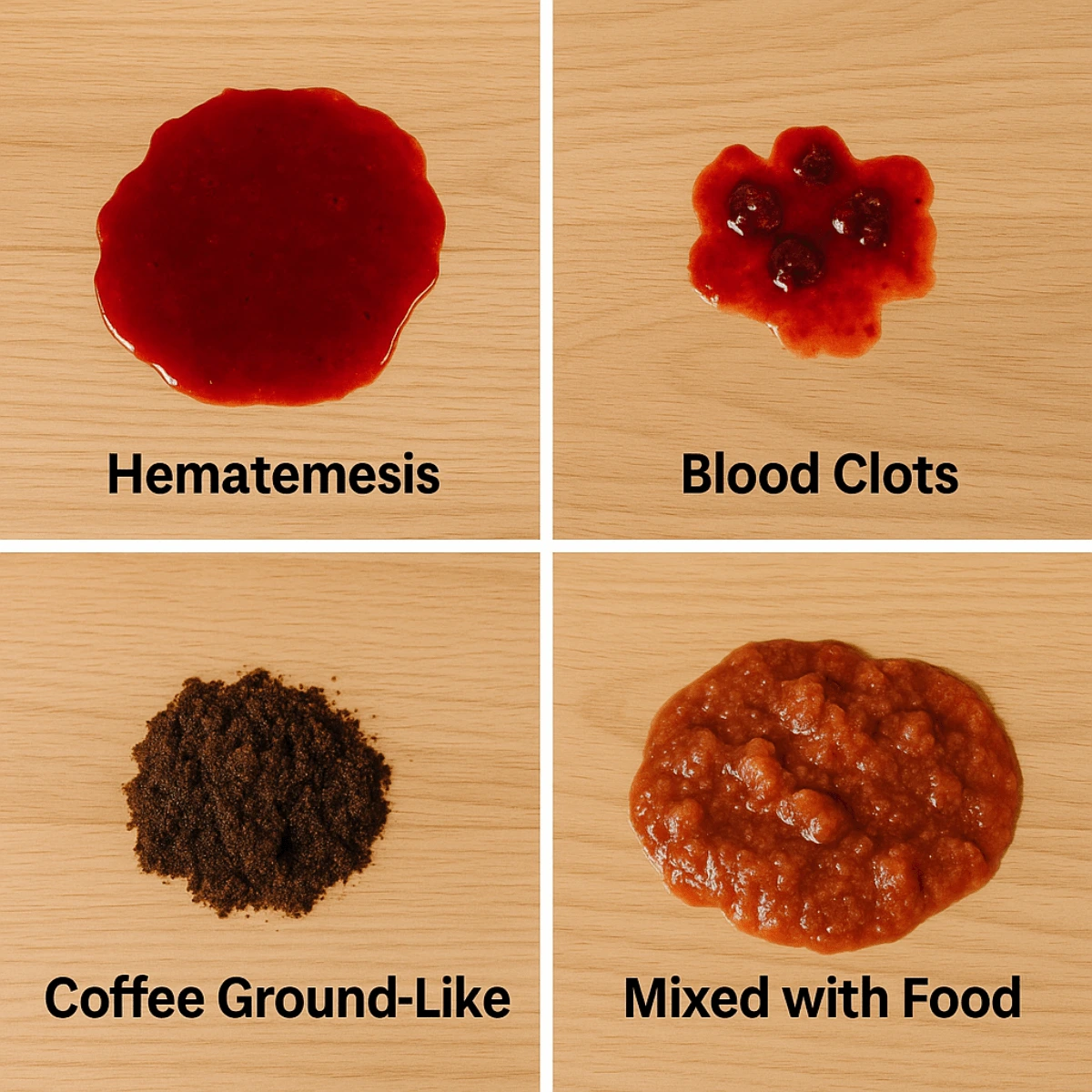
Bright red blood is like the drama queen of vomit. It’s bold, flashy, and unmistakable. When you see it, your heart skips because it usually means bleeding near the top of the digestive tract—think mouth, throat, or upper stomach. It might happen after lots of coughing, retching, or even swallowing something sharp. If it’s paired with mucus, as in dog vomiting bright red blood and mucus, it’s extra concerning. Mucus suggests irritation or inflammation—like the body is trying to shield itself from further damage.
- Dog vomiting bright red blood and mucus often means the bleeding is happening somewhere near the upper GI tract – like the throat or stomach. Fresh = recent.
Dark or Coffee-Ground Blood
If the blood looks more like used coffee grounds or dried prunes, this points to older, partially digested blood. This is a classic sign of internal bleeding deeper in the digestive system—often due to ulcers, poisoning, or even tumors. It’s creepy-looking, yes, but it’s also a useful clue for your vet. Don’t wait this one out. Get help, especially if your dog also seems weak or isn’t eating.
- Dog vomiting dark blood usually signals older, digested blood – like from ulcers or internal bleeding. Creepy, but medically meaningful.
Blood Mixed with Other Substances
Bloody vomit is never great, but what it’s mixed with helps tell the full story:
- Dog vomiting blood and mucus: Mucus in vomit is often a response to inflammation in the stomach lining—sort of like the body’s own bubble wrap, but slimier and more alarming.
- Dog vomiting bloody bile: Yellow-green bile mixed with blood may indicate serious gastrointestinal irritation or bile reflux. This isn’t the occasional empty-stomach spit-up. It needs attention.
- Dog vomiting blood and foam or dog threw up foamy blood: Foam usually means the stomach is mostly empty. This combo may point to esophageal or lung irritation. If it’s recurring, it’s a red flag.
- Dog vomiting blood clots: This is serious. For blood to clot, the bleeding had to be significant. Whether it’s from a torn vessel or something more internal, your dog needs vet care yesterday.
- Dog vomiting blood and mucus could be stomach inflammation.
- Dog vomiting bloody bile points to bile reflux or serious gastritis.
- Dog vomiting blood and foam or dog threw up foamy blood – looks dramatic, and might involve the lungs or esophagus.
- Dog vomiting blood clots – this means there’s been enough bleeding to coagulate. Definitely not a “wait and see” moment.

Dog Vomiting Blood: What It Means and What You Should Do
Worried about your dog throwing up blood? Don’t guess—get guidance. Download our free Dog Vomiting Blood Emergency Checklist to know exactly what signs to look for, questions to ask your vet, and when to act fast. It’s vet-informed, easy to follow, and could save your dog’s life. Grab it now and be prepared before panic sets in.
How Serious Is It? When to Be Concerned
Now, maybe your dog did the whole Exorcist routine, then ran off to chase a butterfly. That’s what makes it confusing.
Don’t Panic, But Do Pay Attention
- Dog threw up blood but is acting normal? Still call your vet. Dogs are stoic little weirdos.
- Dog threw up blood but seems fine: That’s not a free pass. Call your vet and play it safe.
- Dog vomiting blood not eating? That’s your sign to go. Dogs live for food. Skipping meals = major red flag.
- Old dog vomiting blood needs special attention. Seniors have weaker immune systems and can’t bounce back as easily.
What to Do Right Away: First Aid and At-Home Support
Before you throw your dog in the car and zoom off in panic, let’s assess.
First Steps
- First aid for dog vomiting blood includes removing food for a few hours, offering water slowly, and keeping your dog calm. No treats. No chasing the cat. Just rest.
Home Remedies for Mild Cases
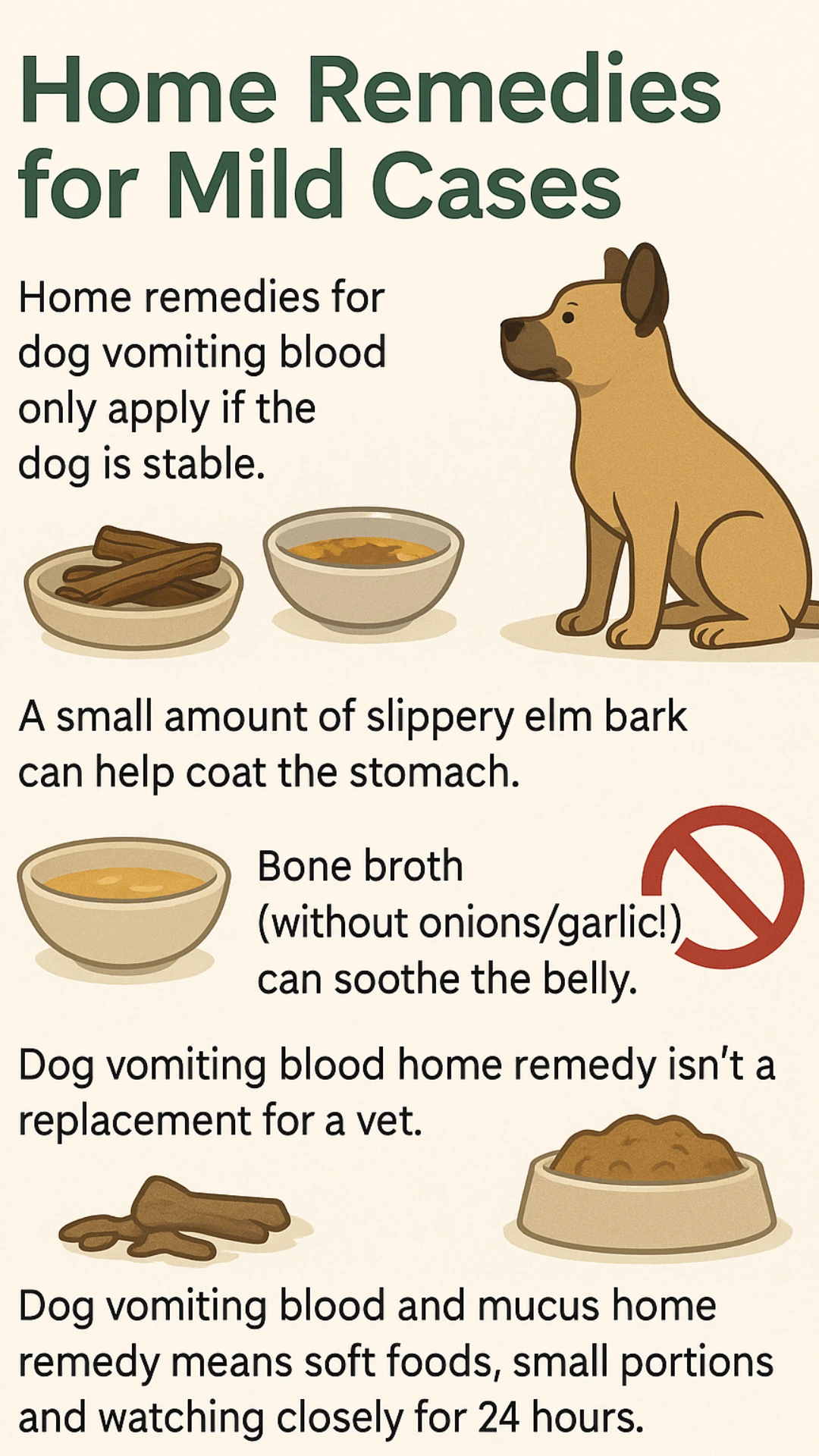
- Home remedies for dog vomiting blood only apply if the dog is stable.
- A small amount of slippery elm bark can help coat the stomach.
- Bone broth (without onions/garlic!) can soothe the belly.
- Dog vomiting blood home remedy isn’t a replacement for a vet.
- Dog vomiting blood and mucus home remedy means soft foods, small portions, and watching closely for 24 hours.
When to Take Your Dog to the Vet
If your dog is vomiting blood more than once, acting lethargic, or refusing food, it’s vet time. Like, now.
What to Expect at the Clinic:
- Blood work to rule out infections or organ issues
- X-rays or ultrasound to check for blockages or tumors
- Stool sample to screen for parasites
They might also check for: ulcers, poisoning, pancreatitis, or something scarier that we won’t mention here because anxiety.
Veterinary Treatment Options
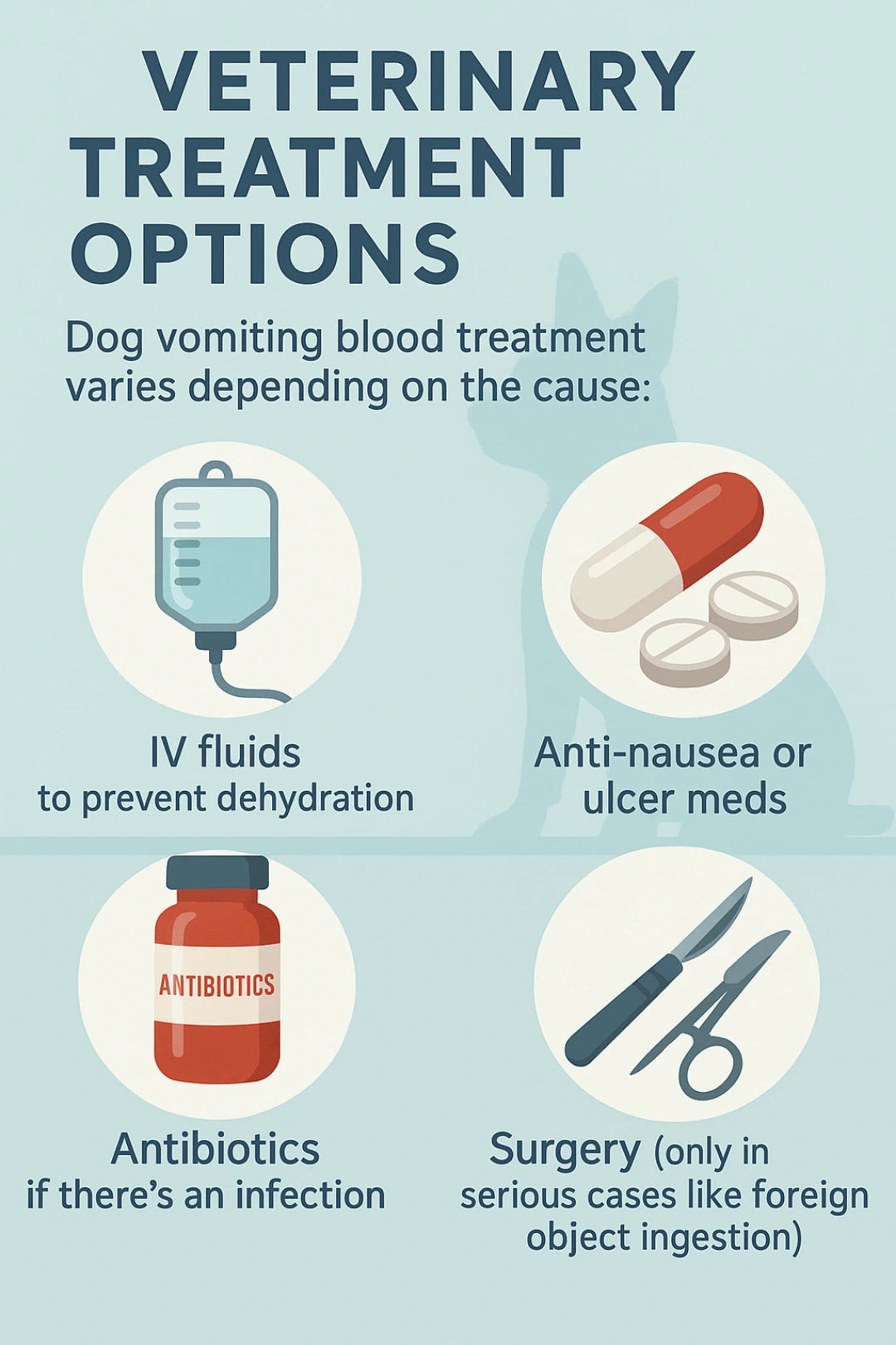
Dog vomiting blood treatment varies depending on the cause:
- IV fluids to prevent dehydration
- Anti-nausea or ulcer meds
- Antibiotics if there’s an infection
- Surgery (only in serious cases like foreign object ingestion)
Prevention and Long-Term Care
Now that you’ve been through the vomit horror show, let’s talk prevention.
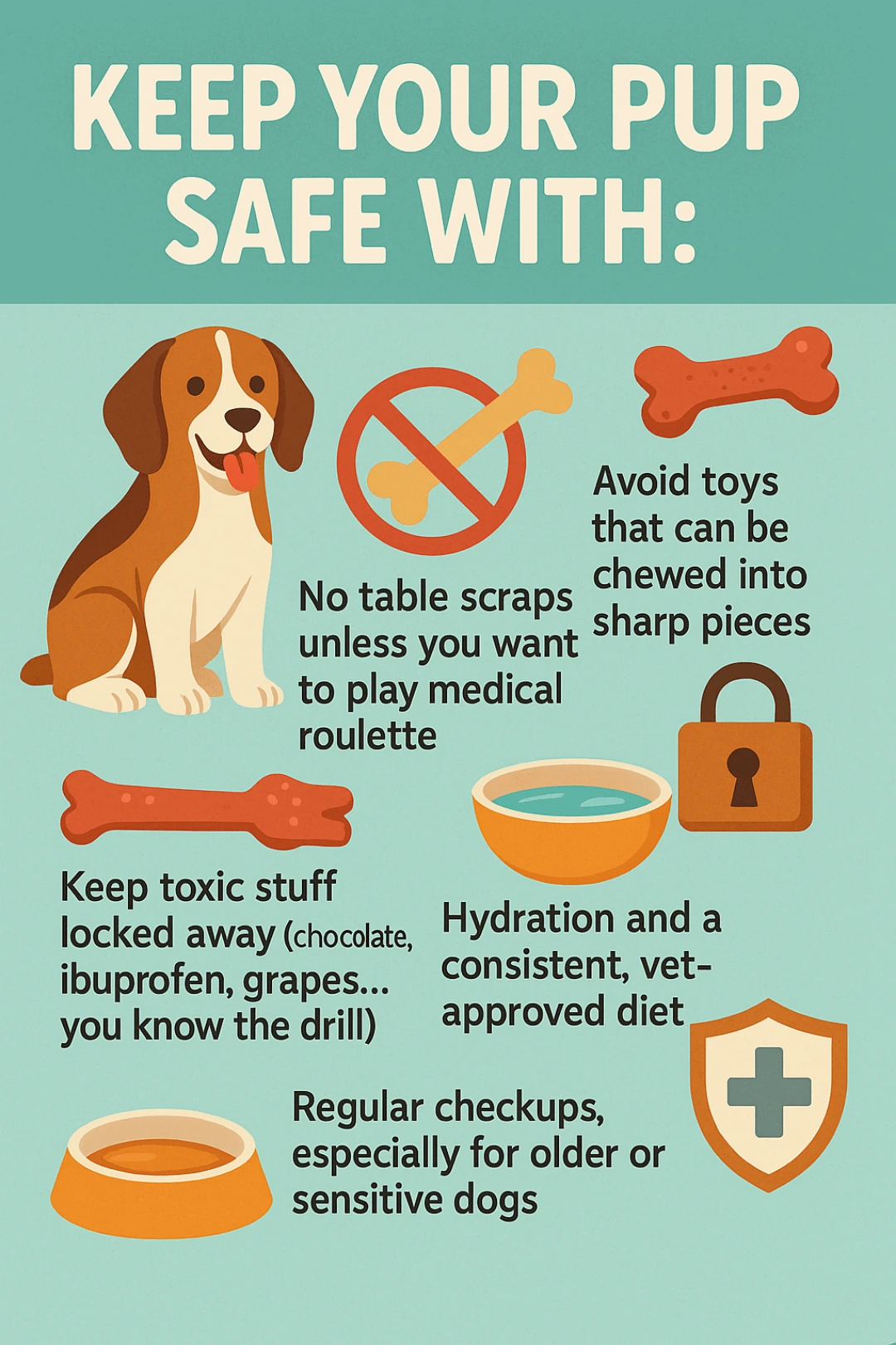
Keep Your Pup Safe With:
- No table scraps unless you want to play medical roulette
- Avoid toys that can be chewed into sharp pieces
- Keep toxic stuff locked away (chocolate, ibuprofen, grapes… you know the drill)
- Hydration and a consistent, vet-approved diet
- Regular checkups, especially for older or sensitive dogs
FAQs and Common Concerns
What if my dog only vomited blood once?
Still worth a call to your vet. Once could mean a scratch. Or it could be a warning shot.
What’s the difference between mucus and foam in vomit?
Mucus is slimy. Foam is bubbly. Neither belongs in barf.
Can stress cause a dog to vomit blood?
It can contribute, especially in anxious dogs. But it’s rarely the sole reason. Stress + underlying issue = barf with blood.
Could it be something they ate?
Absolutely. Ingesting sharp objects, bones, toxins, or spoiled food can irritate the stomach lining and lead to bloody vomit. When in doubt, vet it out.
Is bloody vomit always an emergency?
Not always, but it’s never something to ignore. Even one episode can signal a serious underlying issue—better safe than sorry.
What if my dog is still eating and acting normal?
Even if appetite and behavior seem fine, blood in vomit means something’s up internally. Dogs are champs at hiding pain, so don’t skip the vet check.
Can parasites cause blood in vomit?
Yes. Heavy infestations of worms or other parasites can damage the stomach or intestines and lead to bloody vomiting. A fecal exam can help rule this out.
Final Thoughts
Seeing blood in your dog’s vomit is terrifying. But don’t jump to conclusions. Stay calm, observe, act quickly but wisely. Your fur baby is counting on you to be the grown-up here.
And hey, if you made it through this post without gagging, panicking, or crying? You’re already doing great. Give your pup a gentle pat and yourself a high-five. Then call the vet.
Because when it comes to dogs and blood, it’s better to be the overreactive dog parent than the regretful one.
Stay strong, stay silly, and stay vigilant. 🐾
Thank you for reading our Blog Post
























0 Comments