

Why Is My Dog Losing Hair? Causes, Symptoms & What to Do
So, your dog’s rocking a new patchy look and you’re wondering if it’s the latest canine fashion statement — or something you should panic about. Don’t worry. You’re not alone in this fur-stration. Hair loss in dogs (also known as alopecia) is more common than you think, and the causes range from totally harmless to “yeah, we should call the vet.”
Let’s unravel the mystery of your pup’s vanishing fur coat — one bald spot at a time.
Common Areas Where Dogs Lose Hair
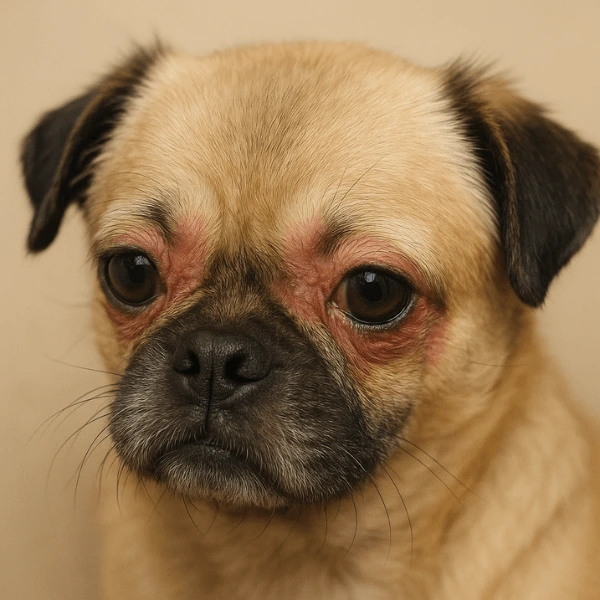
Hair Loss in Dogs Around the Eyes
You spot thinning fur around your pup’s peepers, and now they look like a worried raccoon. Hair loss around the eyes can be due to:
- Allergies (food, environmental, or topical)
- Mites (demodex, the invisible itch gremlins)
- Tear stains or excessive rubbing
Is it allergies, mites, or something else?
Redness, swelling, or crustiness? Have a vet rule out mites or infections. Just watery eyes and scratching? Start with an allergy check.
Breeds prone to eye-area hair loss
Pugs, French Bulldogs, and Shih Tzus — basically any smoosh-faced pup — often struggle here. Their adorable wrinkles can trap moisture and bacteria.

Hair Loss in Dogs on the Tail
The “rat tail” look isn’t trending. If your dog’s tail is going bald:
- Fleas love tail bases (yum?)
- Hormonal disorders (like hypothyroidism) often show here
How to check for fleas or hormone imbalances
Flea dirt looks like pepper flakes. Hormones? That’s a vet’s job — expect bloodwork. And don’t forget: regular deworming and parasite prevention can nip this in the bud.
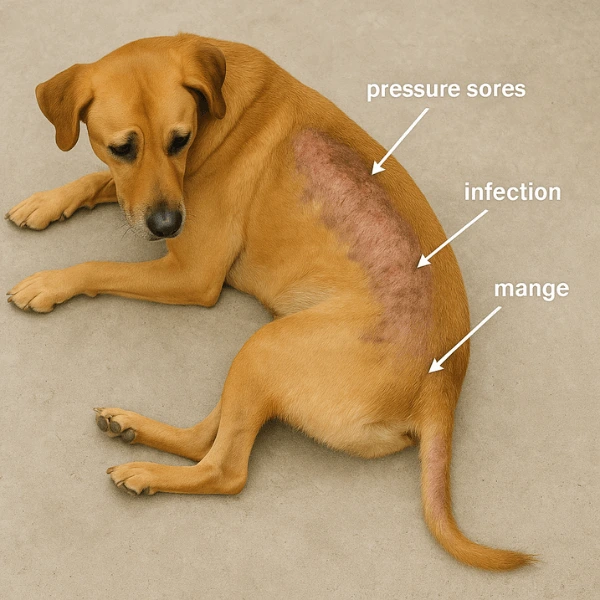
Hair Loss in Dogs on the Back
Bald patches on the back can mean:
- Pressure sores (big dogs, hard floors)
- Seasonal shedding gone rogue
- Skin infections or mange
Could it be mange or infection?
If your dog’s scratching like they’re auditioning for a flea circus, call the vet. Sarcoptic mange (contagious) and bacterial infections both cause back balding. Be cautious — some skin conditions can spread to other pets or even you!
Hair Loss with Additional Symptoms
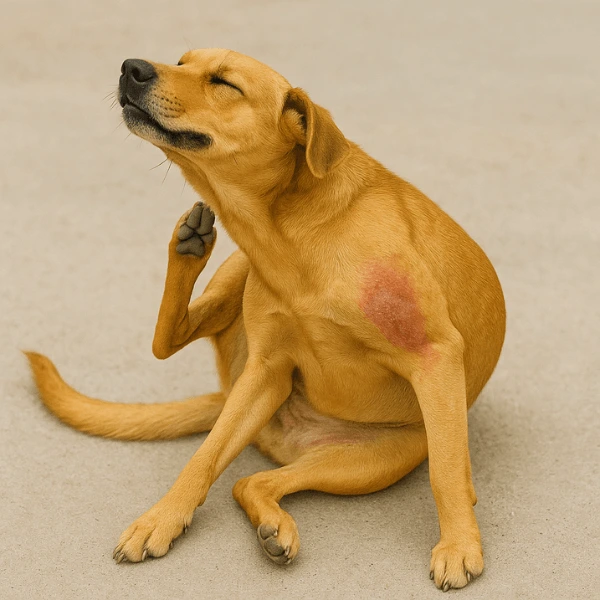
Hair Loss in Dogs With Itching
If your dog’s scratching like a DJ at a block party, we’re dealing with more than just bad hair days.
Signs of allergies, dry skin, or hot spots
Itching, redness, flaking, or raised spots? These can stem from food sensitivities, dust mites, pollen, or dry indoor air. Hot spots, or acute moist dermatitis, can grow fast and may need medical attention.
Diet-related causes and quick food swaps
Try a limited ingredient diet or add omega-3s (from fish oil or sardines). Bonus: it’s great for the coat too. Always introduce new foods slowly over 5–7 days to avoid tummy trouble.
Why Is My Dog Losing Hair Without Any Itching or Pain?
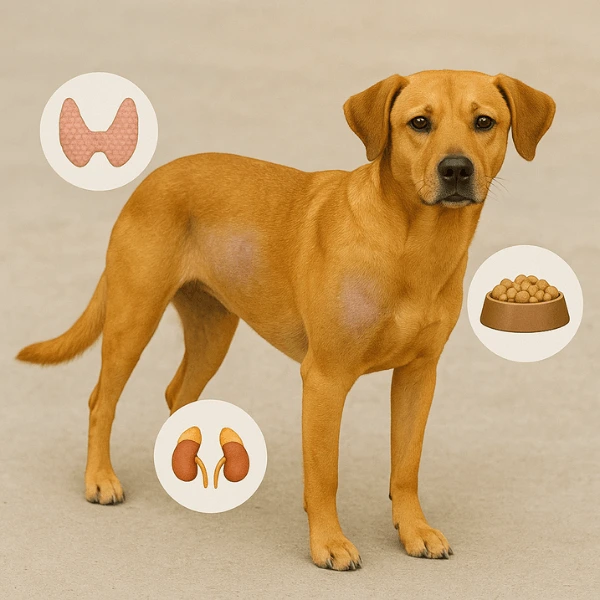
Hair Loss in Dogs Without Itching
No scratching, but hair’s falling out? That screams internal issue. As highlighted in the Merck Veterinary Manual, symmetrical hair loss without irritation often points to endocrine disorders, such as hypothyroidism or Cushing’s Disease. Dogs with these conditions may also show signs like lethargy, a potbelly, or skin thinning. (Merck, 2023)
Is it hormonal? Thyroid, Cushing’s, or something else?
- Hypothyroidism: Common in middle-aged dogs, especially Golden Retrievers and Dobermans.
- Cushing’s Disease: Hair loss, pot belly, increased thirst, panting
- Poor nutrition: Low-quality food can cause shedding and dull coats. Look for AAFCO-compliant labels.
When to get a vet’s opinion
If there’s symmetrical hair loss (both sides), unexplained weight gain/loss, skin thinning, or odd behaviors, it’s time for a checkup.
Root Causes of Hair Loss in Dogs
Why Is My Dog Losing Hair? 5 Causes Every Owner Should Know
Parasites Like Mites and Fleas
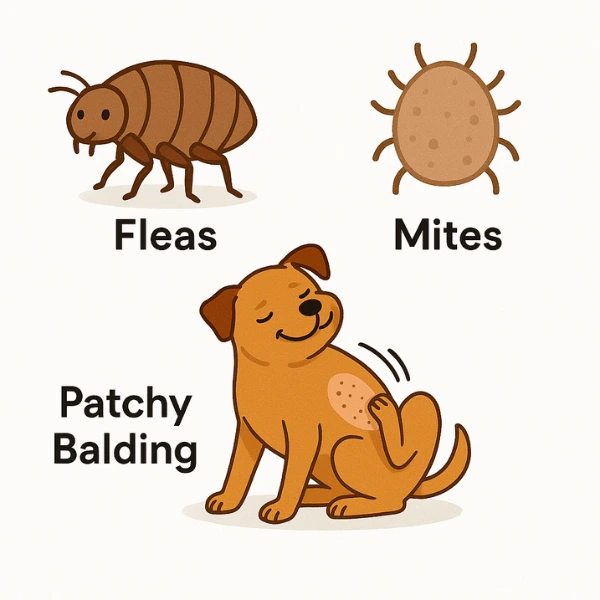
They’re tiny, sneaky, and they suck — literally. According to the Cornell University College of Veterinary Medicine’s dermatopathology guidelines, mites like Demodex can burrow into follicles, leading to patchy alopecia. Flea infestations may cause intense scratching and secondary bacterial infections if left untreated. — literally. Fleas often target the tail and lower back. Mites (especially demodex or sarcoptes) can attack anywhere. These pests are a common cause of sudden bald spots.
Allergies – Food, Environmental, or Contact
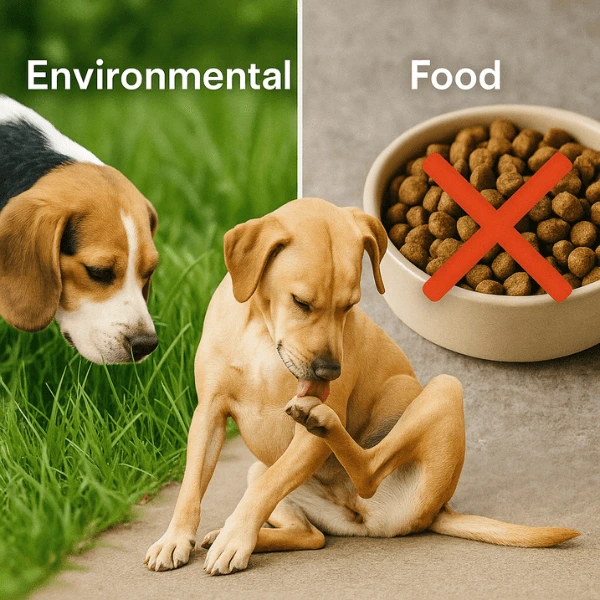
Dogs can be allergic to anything: chicken, grass, your laundry detergent. Symptoms include itching, licking, bald spots, and ear infections. A vet may recommend an elimination diet or allergy testing.
Fungal or Bacterial Infections
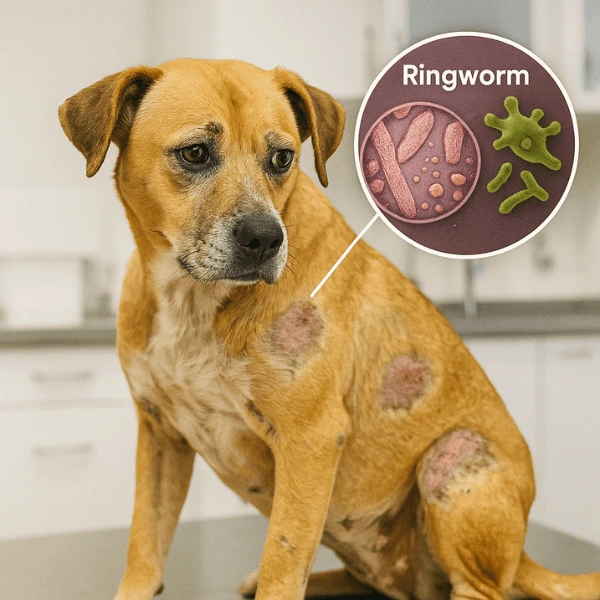
Ringworm (which is a fungus, not a worm — thanks, science!) causes circular bald patches. Staph infections often look like red pimples that burst and scab.
Hormonal Imbalances (Thyroid, Adrenal Issues)
Imbalanced hormone levels mess with hair growth cycles. The AVMA notes that seasonal flank alopecia and hypothyroidism are frequently diagnosed in dogs with symmetrical hair loss and lethargy. These conditions often require hormone panel testing to confirm a diagnosis. Cushing’s, hypothyroidism, and even diabetes can alter hair texture and cause patchy loss.

Poor Nutrition or Low-Quality Diets
Cheap kibble = cheap coat. According to Veterinary Partner (VIN), poor nutrition—especially low levels of zinc, biotin, or omega-3 fatty acids—can contribute to brittle hair shafts and excessive shedding. Look for AAFCO-compliant dog foods with whole food ingredients. Dogs need healthy fats, proteins, and minerals to grow and keep hair. Zinc and biotin deficiencies are especially problematic.
How to Help Your Dog Regrow Healthy Hair
Vet Treatments: Medications, Shampoos, and Tests
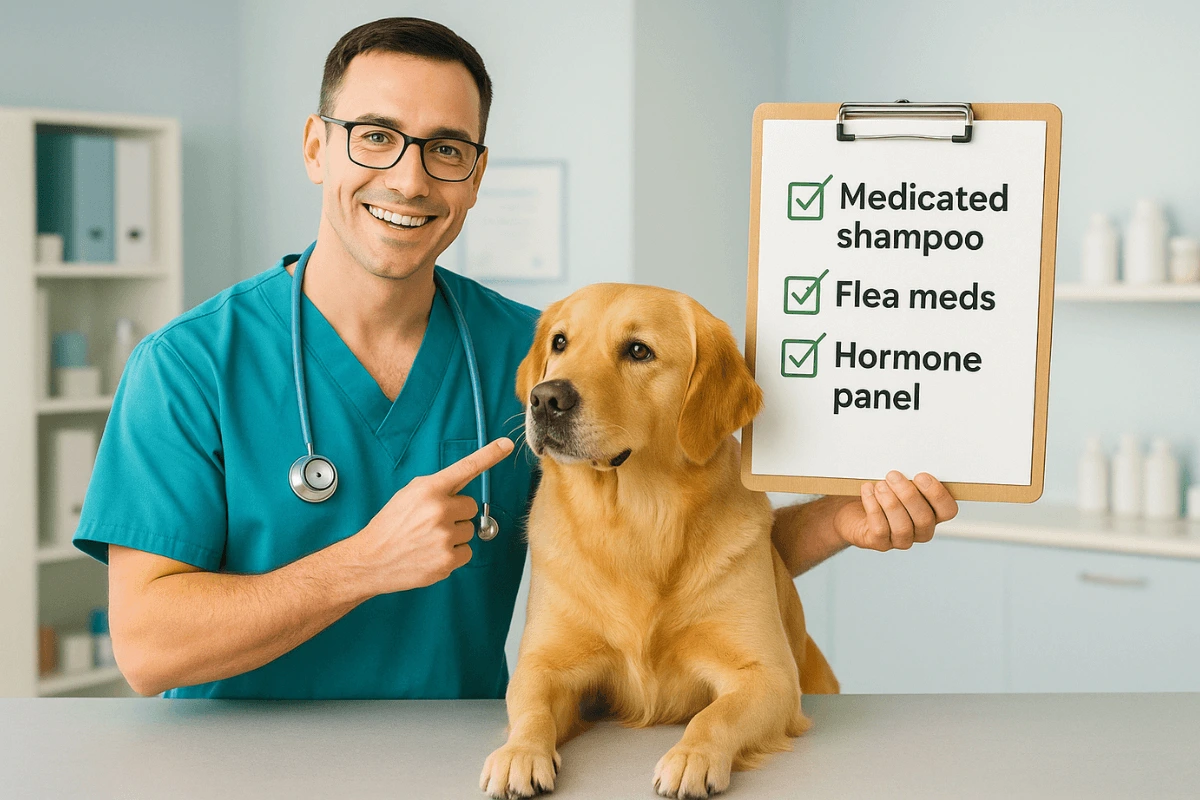
Once your vet identifies the cause, they may recommend:
- Medicated shampoos (antifungal or antibacterial)
- Prescription meds (thyroid, antibiotics, antifungals)
- Flea/tick preventatives
- Hormone-balancing therapies
Home Remedies for Mild Cases
Alopecia X, a cosmetic condition common in Pomeranians, has seen promising results with deslorelin implants according to a study in the Veterinary Dermatology Journal (2024). Though not dangerous, it’s a prime example of how even non-itchy baldness may have a tailored solution.
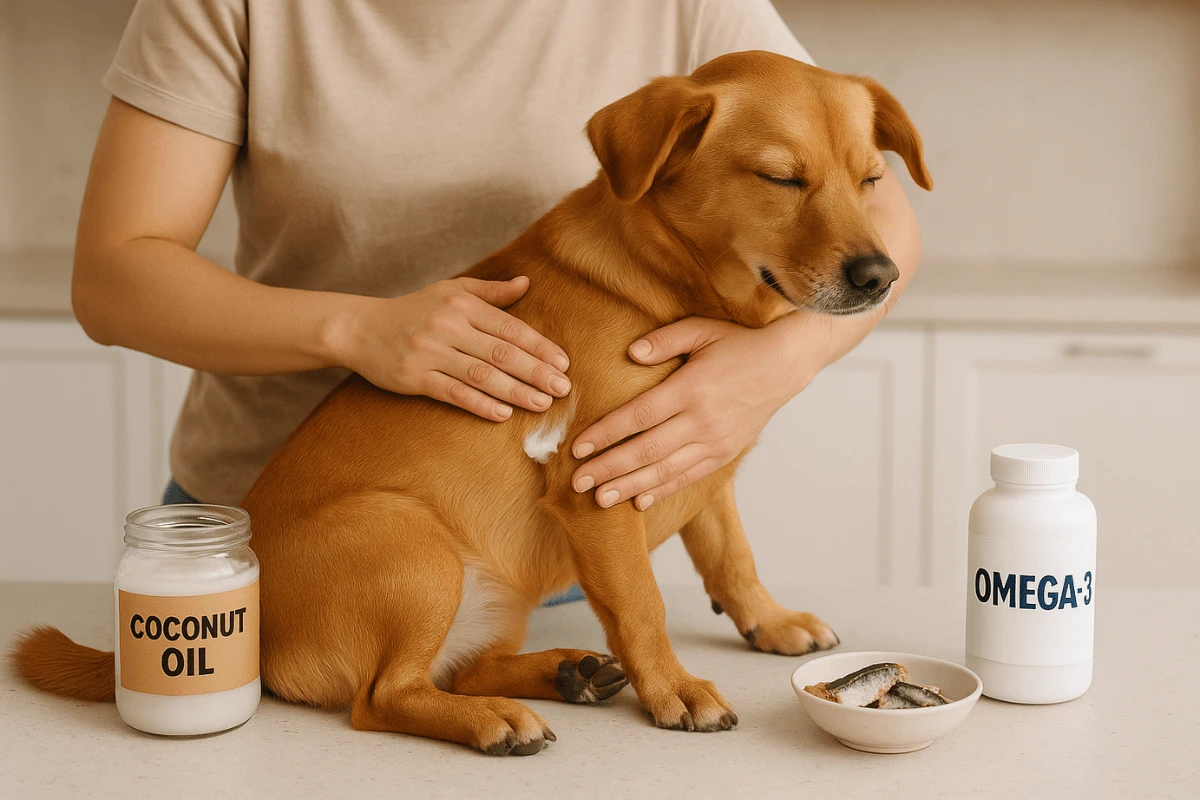
Coconut oil rubs
Natural anti-inflammatory and moisturizer. Massage into itchy spots 2–3 times a week. Avoid overuse — oily skin can clog pores.
Omega-3 supplements and diet changes
Sardines (packed in water), fish oil, or flaxseed can do wonders. Always consult your vet before adding supplements, especially if your dog has underlying conditions.
When to See the Vet (Red Flags)
- Sudden large patches of missing hair
- Constant licking or biting
- Crusty, bleeding, or infected skin
- Behavioral changes (lethargy, thirst, aggression)
- No improvement after 1–2 weeks of at-home care
Preventing Future Hair Loss
Regular Grooming and Parasite Control
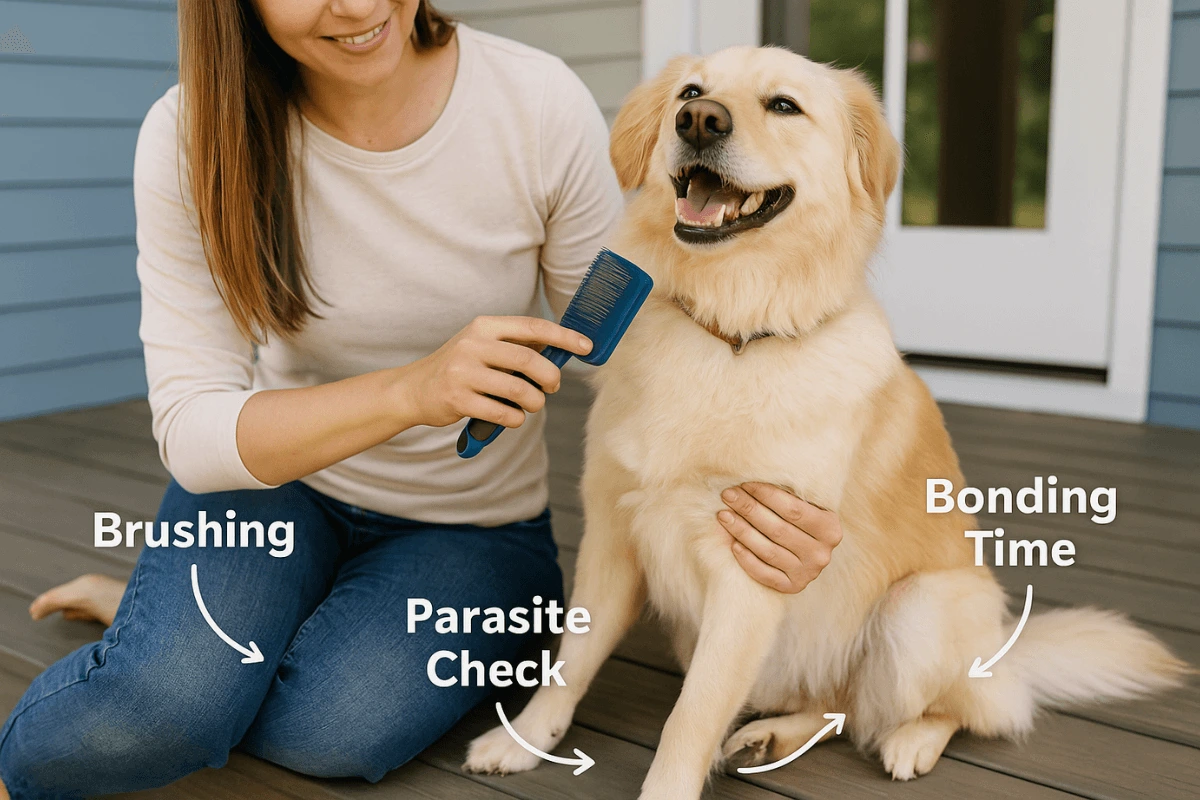
Brush your dog often to distribute natural oils and catch early signs of skin issues. Use flea/tick preventatives monthly. Stick to grooming routines — it helps spot changes early.
Nutritional Upgrades for Skin & Coat Health
Add salmon oil, flaxseed oil, or a vet-recommended multivitamin to meals. Stick to high-protein, balanced kibble — or try rotating fresh or gently cooked food into the mix.
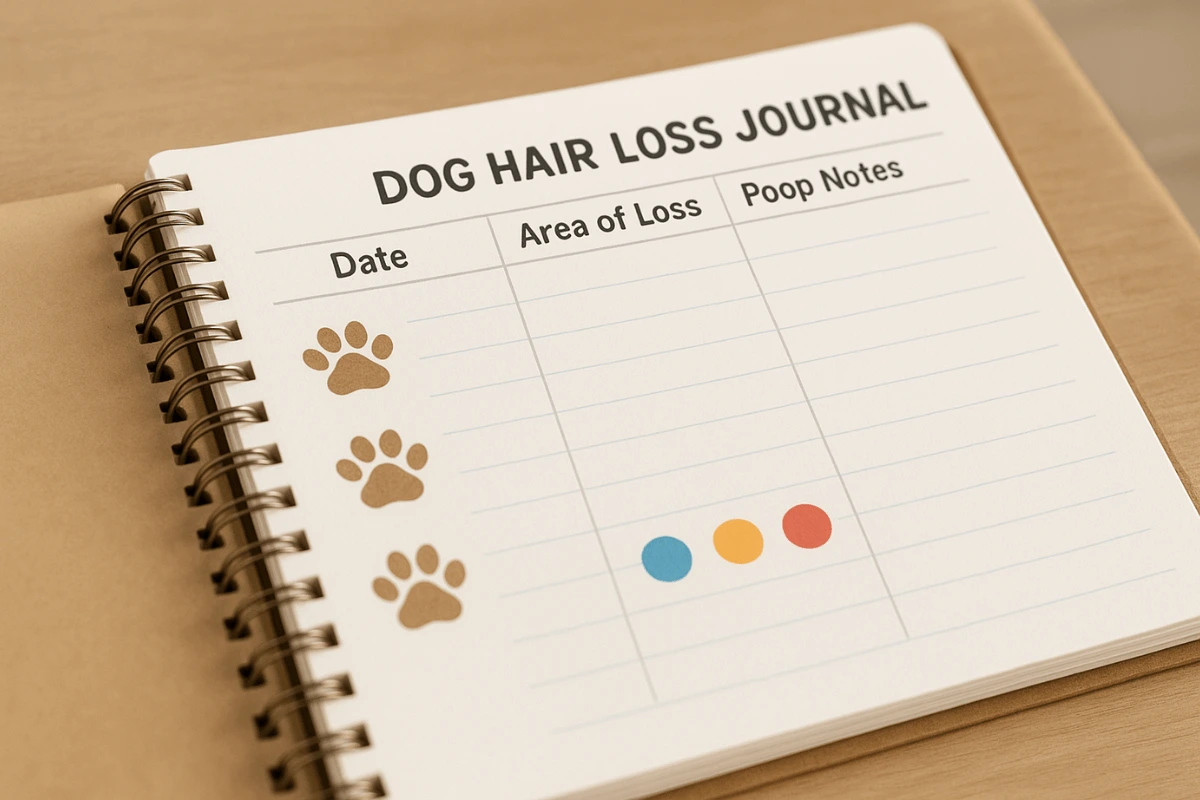
How to Track Hair Loss in a Poop/Coat Diary
Yes, it sounds silly — but a weekly note of coat condition, shedding patterns, and poop health gives you a timeline of changes to discuss with your vet. Use simple headings: Date, Changes Noticed, Food Given, Poop Notes, Mood.
People Also Ask
Why is my dog losing hair around the eyes?
It could be allergies, mites, or excessive rubbing. Short-snouted breeds are especially prone.
Can fleas cause hair loss in dogs?
Yes! Fleas often cause bald spots on the tail base and lower back.
What if my dog has hair loss and itching?
Likely allergies or skin infections. Look for redness or scratching. A vet can confirm.
What vitamin deficiency causes hair loss in dogs?
Deficiencies in biotin, zinc, or omega-3s can lead to shedding or bald patches.
Can shampoo help with dog hair loss?
Yes — medicated shampoos (for fungal or bacterial issues) can help with vet guidance.
Can stress or anxiety cause hair loss in dogs?
Absolutely. Excessive licking or chewing due to stress can lead to localized hair loss (aka “lick granulomas”).
How long does it take for dog hair to grow back?
Depends on the cause. Mild cases (like seasonal shedding or allergies) may resolve in 2–4 weeks. Hormonal or infection-based cases may take months.
References:
- VCA Animal Hospitals. “Hair Loss (Alopecia) in Dogs.” vcahospitals.com
- AKC. “Dog Shedding: What’s Normal & What’s Not.” akc.org
- PetMD. “Hair Loss in Dogs (Alopecia): Causes and Treatments.” petmd.com
- Merck Veterinary Manual. “Alopecia in Dogs.” merckvetmanual.com
- Whole Dog Journal. “Home Remedies for Dog Hair Loss.” wholedogjournal.com
- American Veterinary Medical Association. “Seasonal Flank Alopecia in Dogs.” avmajournals.avma.org
- Cornell University College of Veterinary Medicine. “Dermatopathology Guidelines for Alopecia.” vet.cornell.edu
- Veterinary Dermatology Journal. “Alopecia X Treatment with Deslorelin in Pomeranians.” pmc.ncbi.nlm.nih.gov
- Veterinary Partner / VIN. “Alopecia X in Dogs.” veterinarypartner.vin.com
- The Spruce Pets. “Color Dilution Alopecia in Dogs.” thesprucepets.com













0 Comments