
🐾 Why Is My Dog Exhausted After Boarding?
7 Real Reasons Your Pup Comes Home Acting Like They Pulled an All-Nighter at Dog Camp
You pick up your beloved fur baby from the boarding facility expecting tail wags and maybe even a few happy yelps. Instead? You’re met with a zombie dog — heavy eyes, slow movements, and the enthusiasm of a wet sock.
You immediately wonder:
“Did something happen? Are they sick? Or… are they just being dramatic?”
Take a deep breath, pet parent. You’re not alone. Many dogs come home from doggy daycare or boarding totally wiped out — and yes, there are some very real reasons for it.
Let’s break down the top 7 explanations behind your pup’s post-boarding crash — from the serious to the slightly hilarious — and what you can do to help them bounce back.
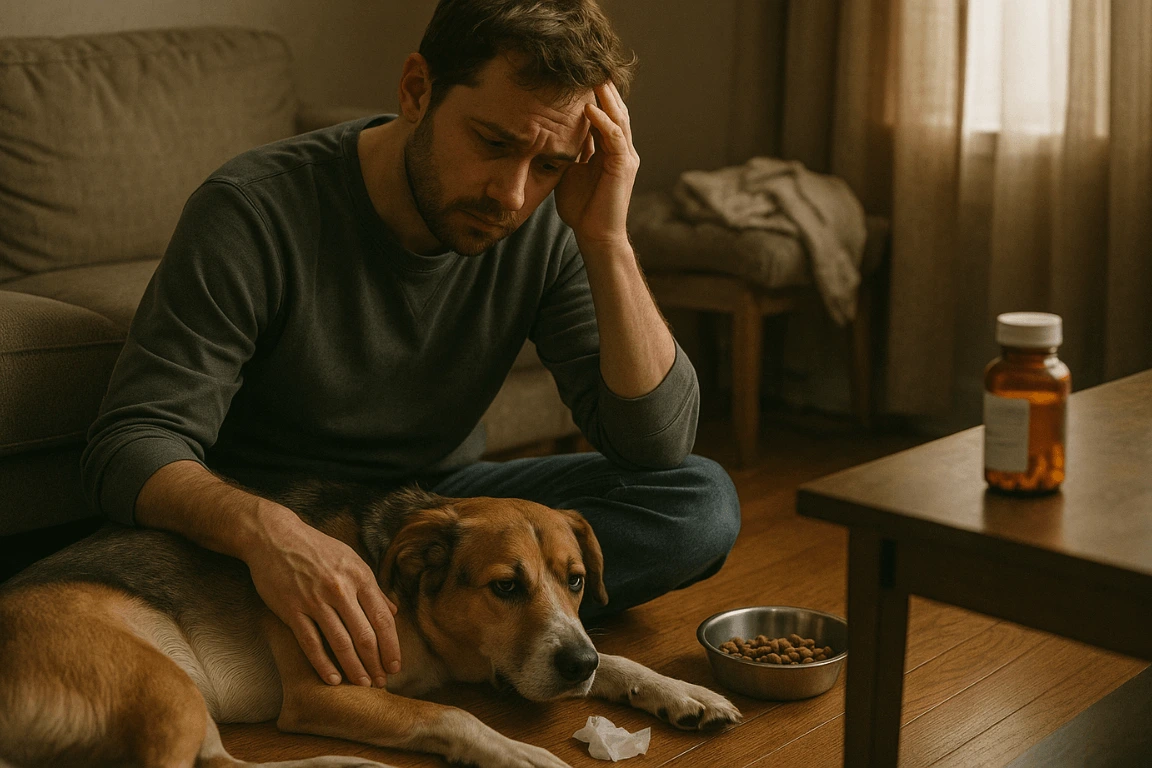
🦠 1. Your Dog Might Be Sick (Let’s Rule This Out First)
First things first: a sudden energy crash could be illness-related, especially if paired with vomiting, coughing, diarrhea, or loss of appetite.
Even though reputable boarding facilities require up-to-date vaccinations (like rabies, bordetella, and canine influenza), no environment is 100% germ-proof. Dogs can still catch things like:
- Kennel cough (a dry, honking cough that sounds like they’ve been chain-smoking)
- Canine flu
- Giardia or other parasites (especially in shared water bowls or potty areas)
- Stress colitis (yup, that’s a thing — diarrhea brought on by anxiety)
🩺 What to do:
Watch your pup closely for 24–48 hours. If symptoms worsen or don’t improve, call your vet. Trust your instincts — better safe than sorry.
Why Is My Dog Exhausted After Boarding? Understanding the Real Reasons Behind Your Pup’s Post-Boarding Fatigue
😰 2. They’re Mentally and Emotionally Fried (Yes, Dogs Can Have Sensory Overload)
Your dog’s boarding experience was likely filled with:
- New smells
- New people
- New dogs
- New rules
- New routines
- New sleeping and eating arrangements
That’s like sending you on a business trip to Tokyo with no sleep, no translator, and bunking with six strangers who snore.
Even the most confident dogs can feel overstimulated by the constant buzz of activity and new stimuli. The result? Mental and emotional burnout.
💤 Once they’re home, your pup may “crash” — sleeping more than usual, acting withdrawn, or needing extra quiet time to feel secure again.
🧘♀️ How to help:
- Keep things calm at home
- Avoid loud guests or chaotic activities for 1–2 days
- Offer quiet companionship (couch cuddles > noisy toys)
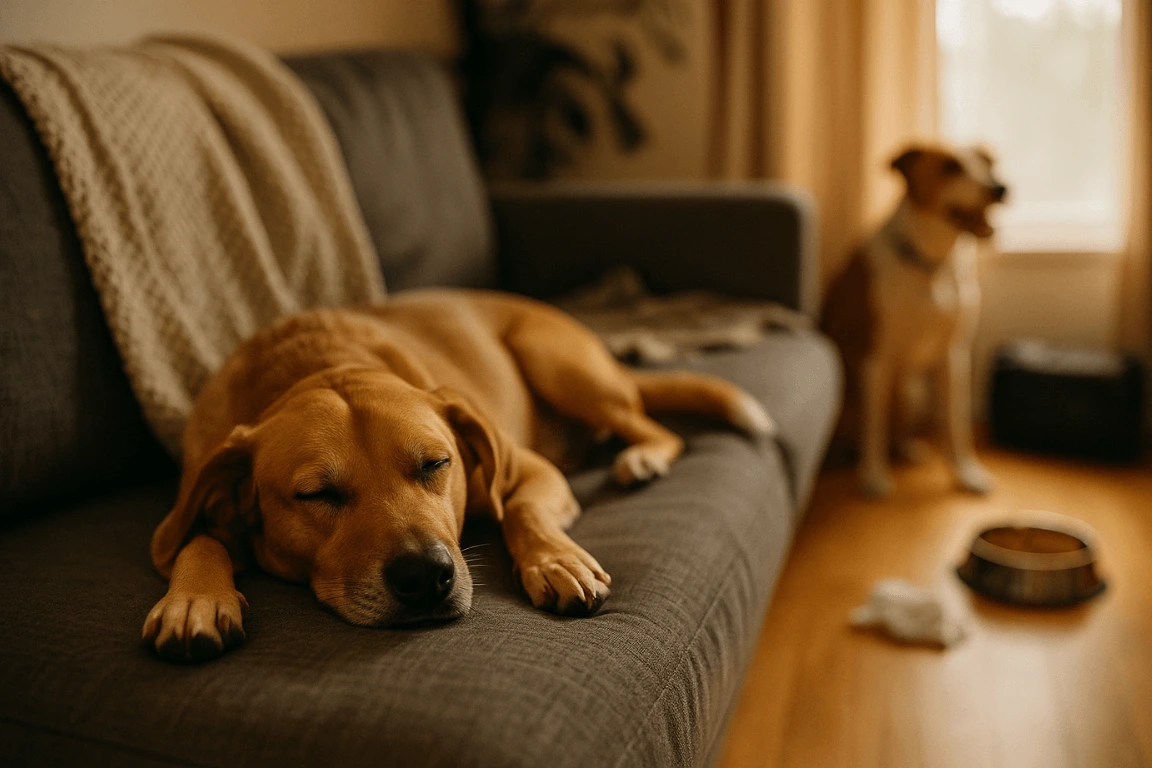
🐕🦺 3. Physical Exhaustion From All That Doggy Socializing
Even if your pup is used to regular walks and play sessions at home, boarding is often nonstop action.
Think:
- Group play sessions
- Walk rotations
- Bark-offs with other dogs
- Jumping, chasing, zoomies galore
It’s like a doggy version of Disneyland — exciting, overstimulating, and totally draining.
🔥 Many pups simply need to catch up on sleep. It’s not laziness — it’s recovery.
🍖 Pro tip: Give them a protein-rich meal and time to snooze. Skip the long walks for a day and let them recover naturally.
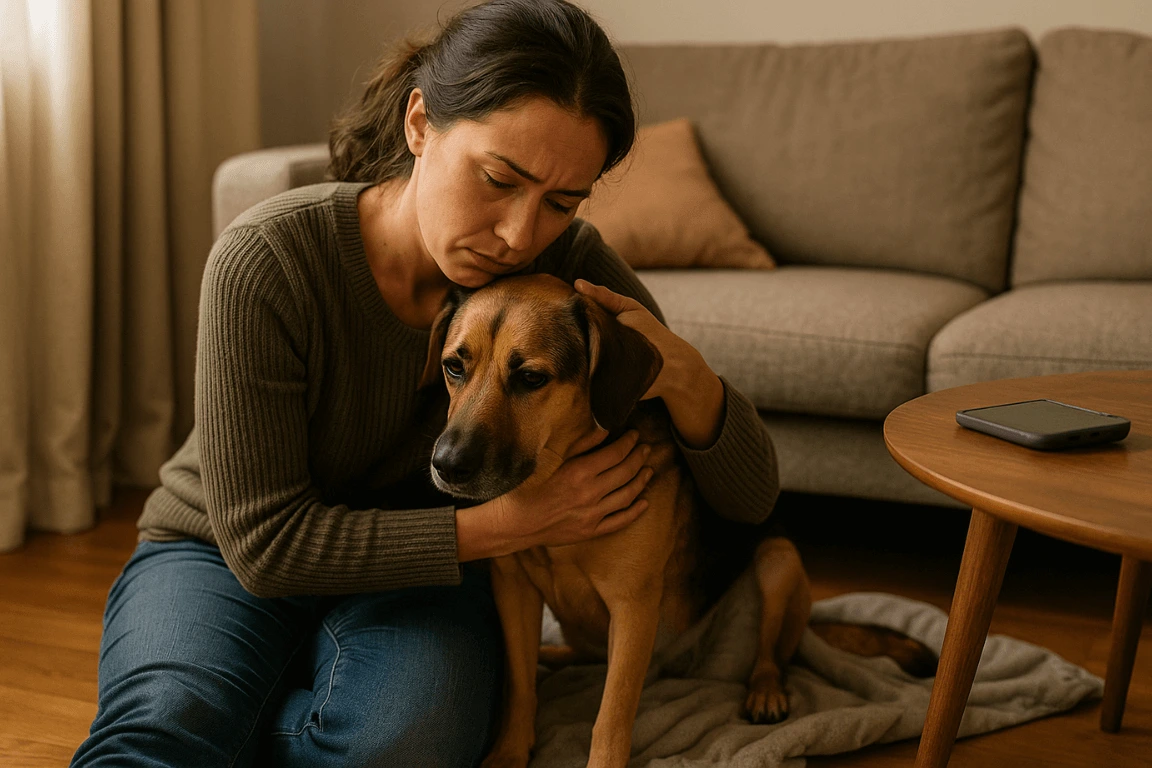
😓 4. They’re Experiencing Post-Boarding Anxiety
Dogs are creatures of habit. Their daily rhythms — from the food bowl placement to the scent of your socks — provide emotional security.
Boarding throws all of that off.
For some dogs, that can create post-boarding anxiety, which shows up as:
- Clinginess or separation anxiety
- Pacing or whining
- Excessive sleeping or avoiding you altogether
😢 Some dogs even regress in housetraining or act out in minor ways once home. Not because they’re bad — but because they need reassurance.
🐾 Rebuild their confidence:
- Give extra praise and positive reinforcement
- Use calming treats, a Thundershirt, or a snuffle mat
- Stick to your regular routines for meals, walks, and bedtime
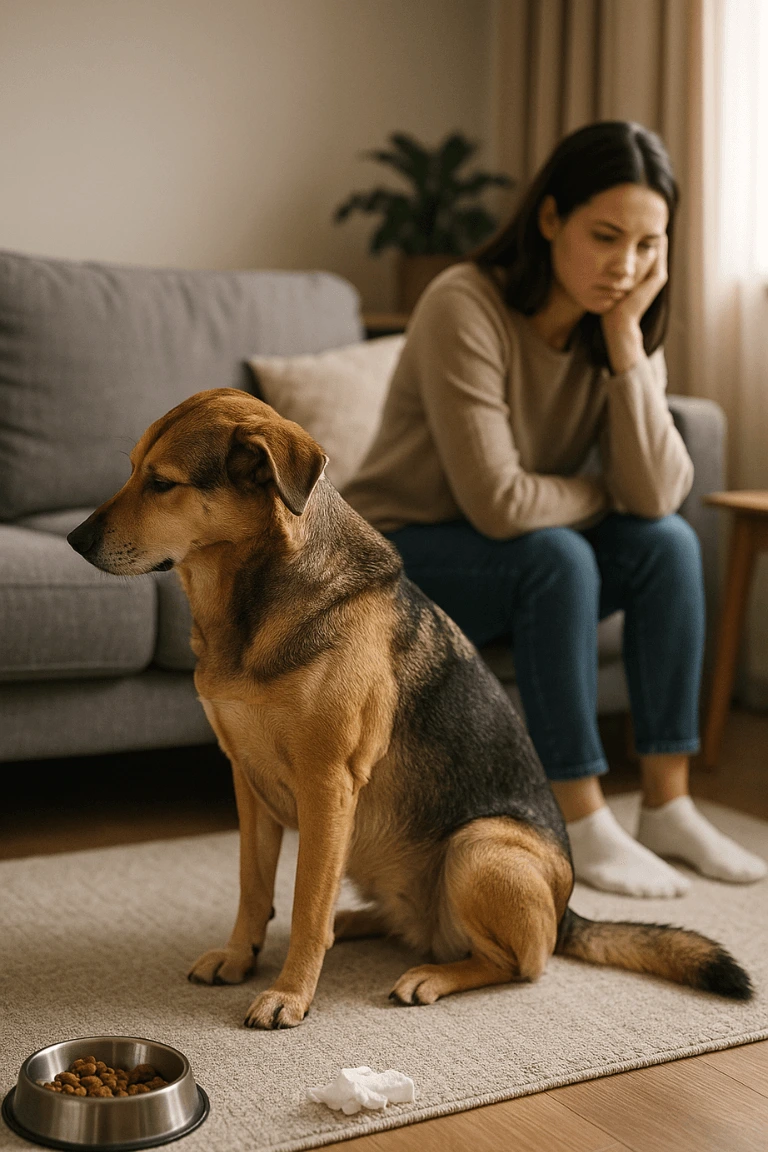
🛏️ 5. They’re “Punishing” You… Sort Of
We’re not saying your dog has mastered passive-aggressive behavior (leave that to the cats), but it can feel that way.
After the initial joy of reuniting, some dogs seem to go into “silent treatment” mode:
- Turning their back to you
- Sleeping in another room
- Ignoring your calls
This isn’t actual spite — but it’s often their way of processing the confusion and disruption of being left behind.
🎾 The fix?
- Rebuild trust with familiar games, treats, and walks
- Don’t smother them — give them space
- Let them reattach at their own pace
Why Is My Dog Exhausted After Boarding? 7 Surprising Causes Every Pet Parent Should Knowe
🧠 6. Their Brain is Tired from Constant Processing
Dogs are natural observers. They take in the world through scent, sound, sight, and energy.
At boarding, they’re surrounded by unfamiliar dogs, noises, people, rules — and their brain is working overtime to decode it all.
This cognitive load creates real neural fatigue — the same kind of burnout you feel after a long day of meetings.
📘 Your dog may:
- Sleep more than usual
- Startle more easily
- Seem zoned out or “low battery”
🌿 Let their mind rest:
- Avoid overstimulating environments for 1–2 days
- Offer calming enrichment like frozen lick mats or puzzle feeders
- Keep walks short and low key
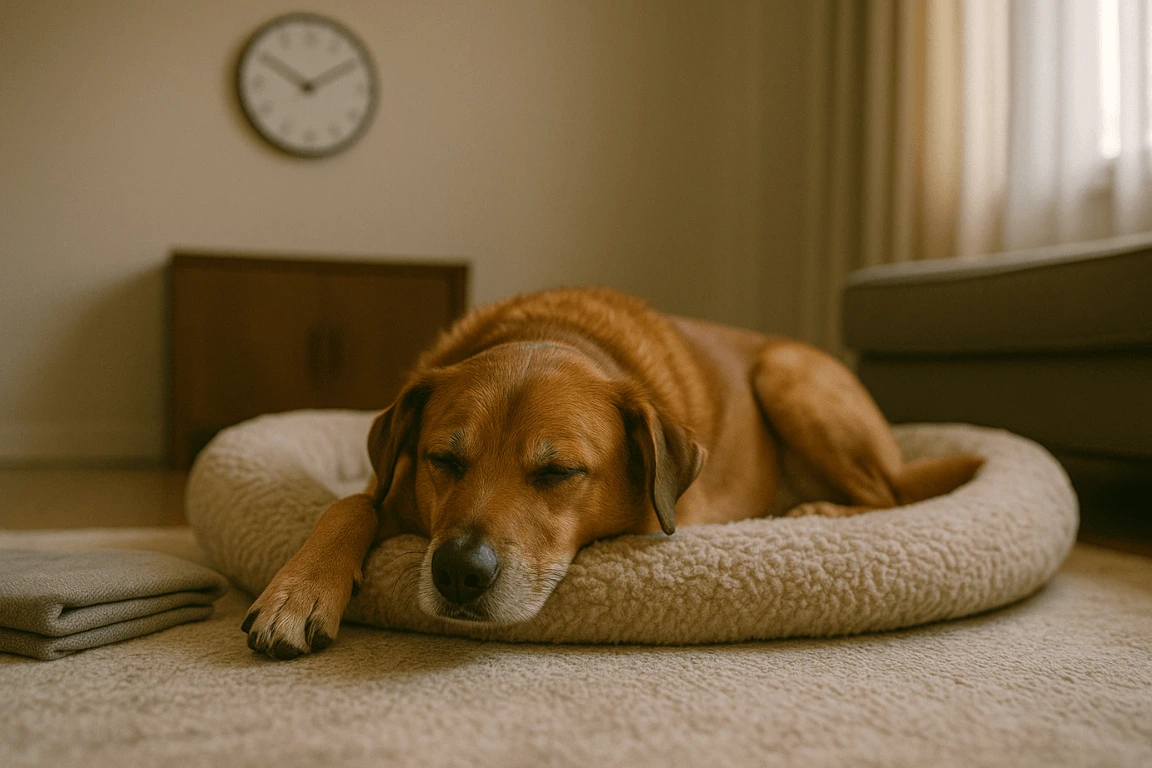
⏳ 7. Recovery Takes Time — But There Is a Timeline
Every dog is different. Some bounce back in a few hours. Others need a full 48–72 hours of recovery, especially after multi-day boarding.
🚩 BUT: If your dog’s lethargy lasts longer than 2–3 days, or if new symptoms arise (vomiting, limping, fever, etc.), it’s time for a vet visit.
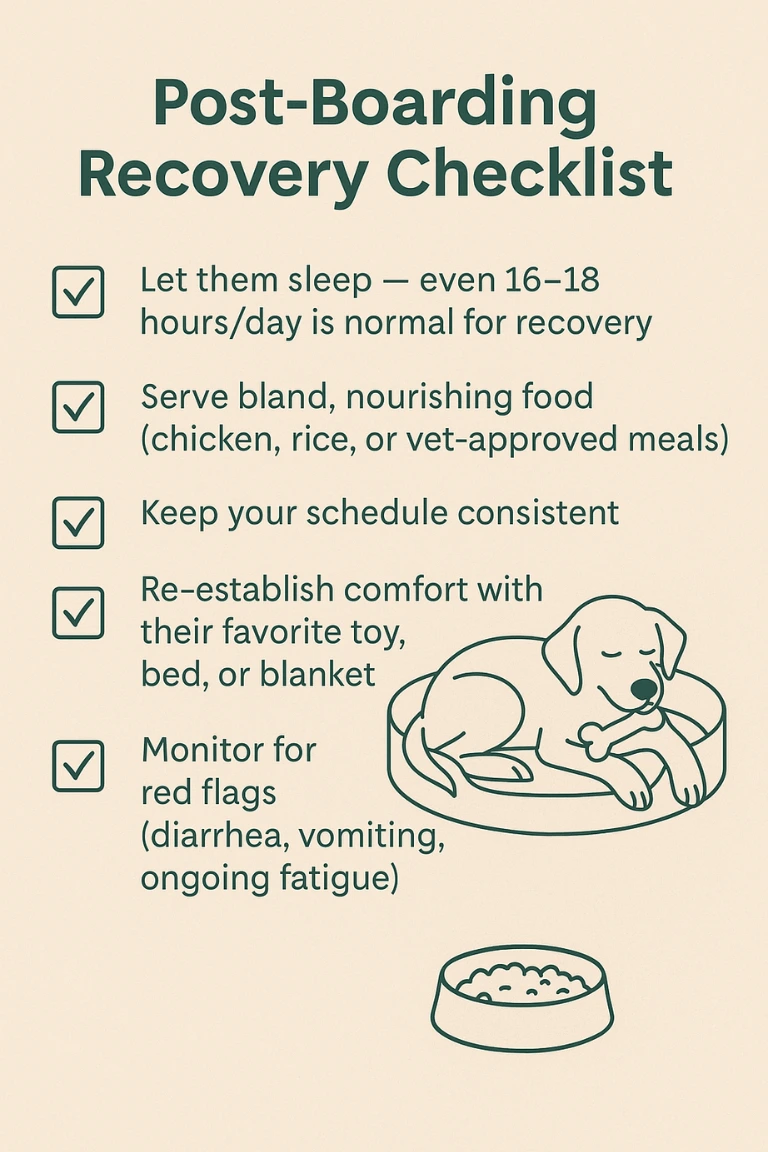
✅ Post-Boarding Recovery Checklist
✔️ Let them sleep — even 16–18 hours/day is normal for recovery
✔️ Serve bland, nourishing food (chicken, rice, or vet-approved meals)
✔️ Keep your schedule consistent
✔️ Re-establish comfort with their favorite toy, bed, or blanket
✔️ Monitor for red flags (diarrhea, vomiting, ongoing fatigue)
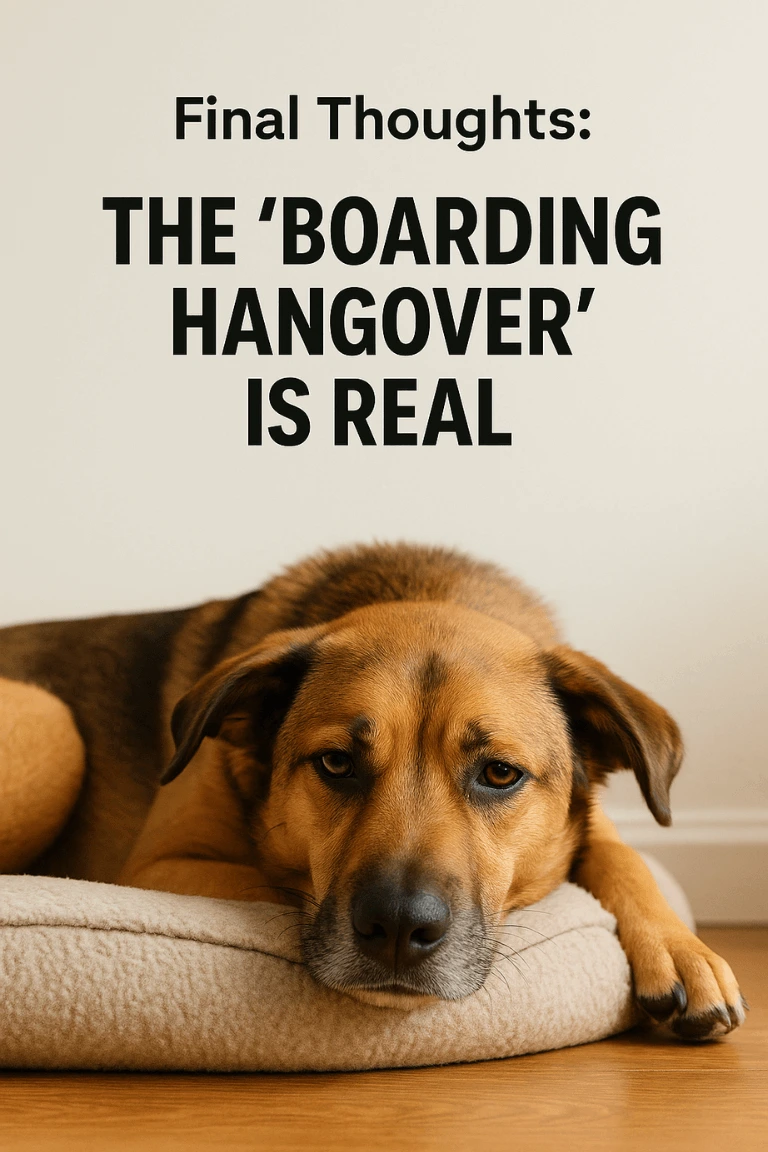
🦴 Final Thoughts: The “Boarding Hangover” is Real
Bringing your dog home from boarding can feel like an emotional rollercoaster — for both of you. Just remember: it’s normal for dogs to be tired, clingy, or even a little standoffish after a big trip.
Most of the time, what your dog really needs is:
- Rest
- Routine
- Reconnection with you
Give them a little grace, a cozy nap spot, and maybe a spoonful of peanut butter love, and they’ll be back to their tail-wagging, bed-hogging selves in no time.


















0 Comments